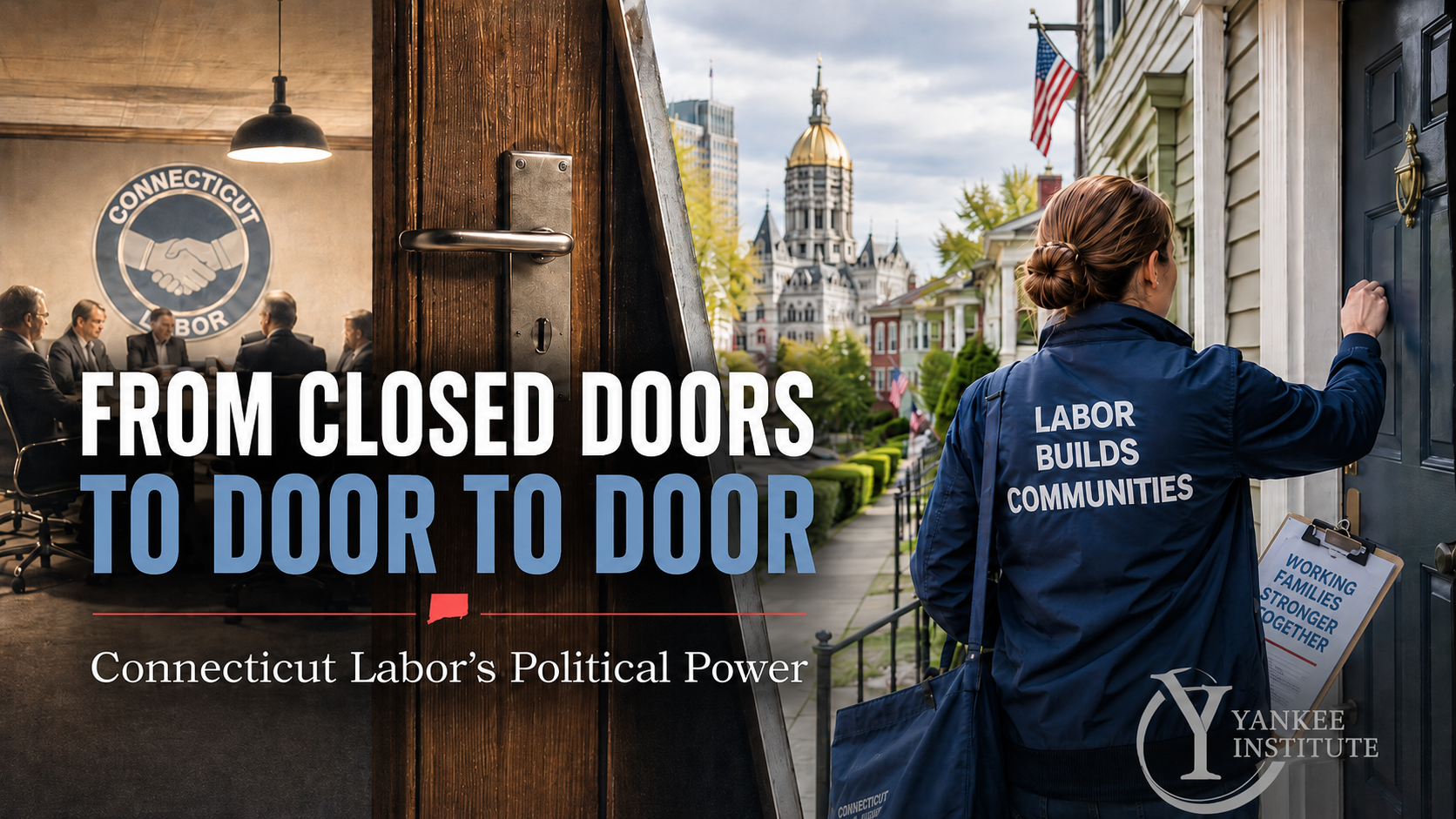
The Connecticut AFL-CIO selected its preferred candidates behind closed doors last month. Now it is putting those endorsements to work.
On July 18, the state’s largest labor federation will launch a door-to-door canvassing campaign from the Hartford headquarters of CSEA SEIU Local 2001. Organizers will train volunteers, provide campaign materials and send union members to speak with fellow union households on behalf of the federation’s endorsed primary candidates in Greater Hartford.
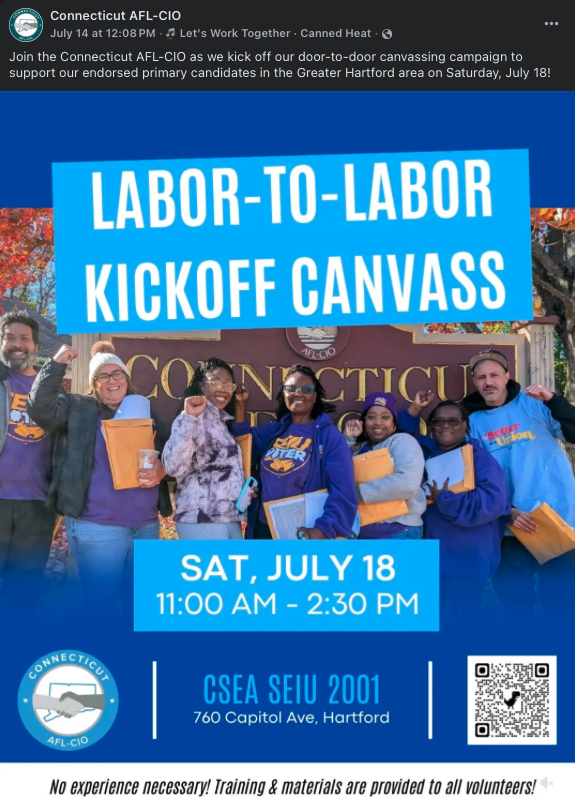
The announcement moves organized labor’s 2026 political operation into its next phase. First came the candidate questionnaires, private interviews and endorsement votes. Now come the organizers, volunteers and direct voter contact.
What an Endorsement Actually Delivers
A labor endorsement is more than a candidate’s name on a website or a logo on campaign literature. It provides access to an existing political network capable of recruiting canvassers and reaching voters connected through union membership. In a low-turnout primary, that infrastructure can matter more than another press release or campaign ad.
The AFL-CIO describes its labor walks as opportunities for union members to knock on doors, connect with fellow union households and have one-on-one conversations about what is at stake in the election, with the goal of persuading those households to support candidates the federation says “stand with working people.”
The significance is not that one campaign gets a few volunteers on a Saturday. It is that the endorsement activates an established political operation with organizers, trained canvassers, campaign materials and direct access to union households. That kind of infrastructure is difficult for most candidates, and nearly impossible for ordinary taxpayers, to match.
The Statewide Political Network
The federation’s statewide endorsement list includes Gov. Ned Lamont, the rest of the Democratic statewide ticket, four congressional incumbents, 24 state Senate candidates and roughly 80 state House candidates. The AFL-CIO is not simply expressing a preference in one race. It is seeking to shape state government from the governor’s office through the General Assembly, and candidates receiving its support gain a ready-made system for converting that endorsement into voter contact.
The endorsement process left a broader unanswered question: what commitments, if any, did candidates make to secure labor’s support? Many of those candidates will later vote on public employee compensation, collective bargaining and other policies affecting union members. The canvassing announcement shows what comes next: labor turns its endorsements into campaign muscle.
Why the Scale Matters
There is nothing improper about union members participating in elections. Workers do not surrender their political rights by joining a union, and labor organizations have every right to campaign for candidates and policies they support.
But the scale of that operation deserves public attention, particularly when participating affiliates represent government employees whose compensation and working conditions are shaped by the officials those unions are helping elect. That is a long-standing feature of public-sector politics, not evidence that any candidate traded a policy commitment for an endorsement. It does, however, explain why labor’s support is worth substantially more than favorable words in a press release: the same organizations that advocate for higher wages, richer benefits and broader bargaining power can also help determine which officials will make decisions on those issues.
That does not make the political activity illegitimate. It makes the power behind it worth understanding.
Most taxpayers participate in politics as individuals — they vote, write to lawmakers, attend hearings or perhaps donate to a campaign. Organized labor participates as an institution. It interviews candidates, makes endorsements, recruits volunteers and directs members toward selected voters.
The endorsement is not the end of the process. It is the beginning of the operation. Last month, labor chose its candidates behind closed doors. Now it is going door to door to help them win.